 Vize
Vize
Musea & AI

AI makes it cheap to produce UI.
That is useful, but it also changes the bottleneck. The hard part is no longer only "can we make a component?" The hard part is:
- does it fit the product?
- does it respect the design system?
- is it accessible?
- is it consistent with existing states?
- can reviewers understand the change?
- can future agents reuse the same intent?
This is why Musea matters.
Generation Needs Constraints
An AI model can produce five versions of a component in seconds.
But without constraints, those versions drift:
- spacing changes
- states are missing
- colors are close but not tokenized
- accessibility gets treated as a suggestion
- empty, loading, error, and disabled states are forgotten
- visual hierarchy changes without a design decision
The design system is the constraint layer.
It tells humans and agents what "good" means for this product.
Design Systems Need to Become Executable
A design system cannot only be a Figma page, a README, or a tribal agreement.
In an AI-heavy workflow, design intent has to be machine-readable:
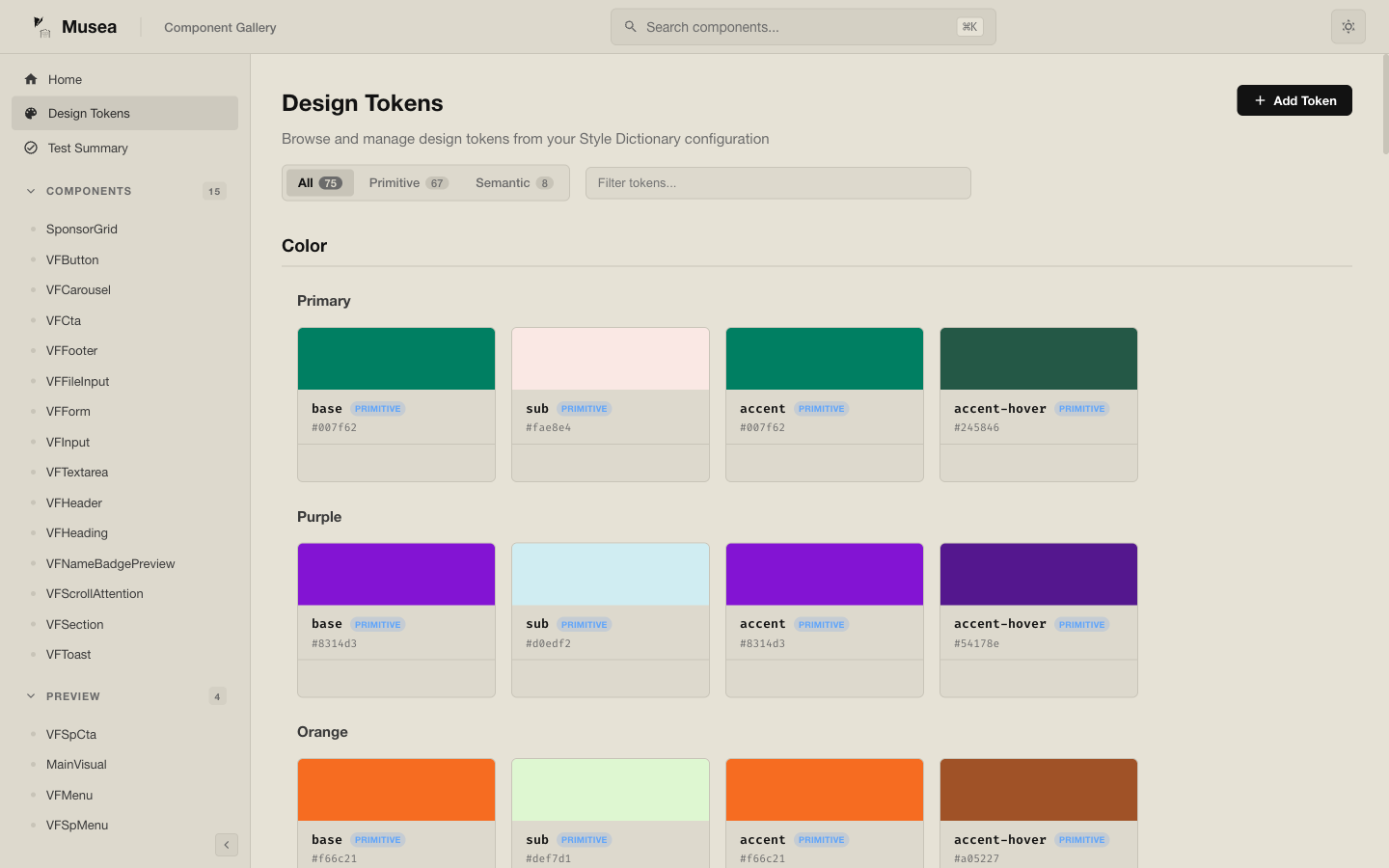
- tokens
- component metadata
- examples
- states
- accessibility expectations
- visual regression baselines
- usage notes
- generated docs
That is the direction Musea takes.
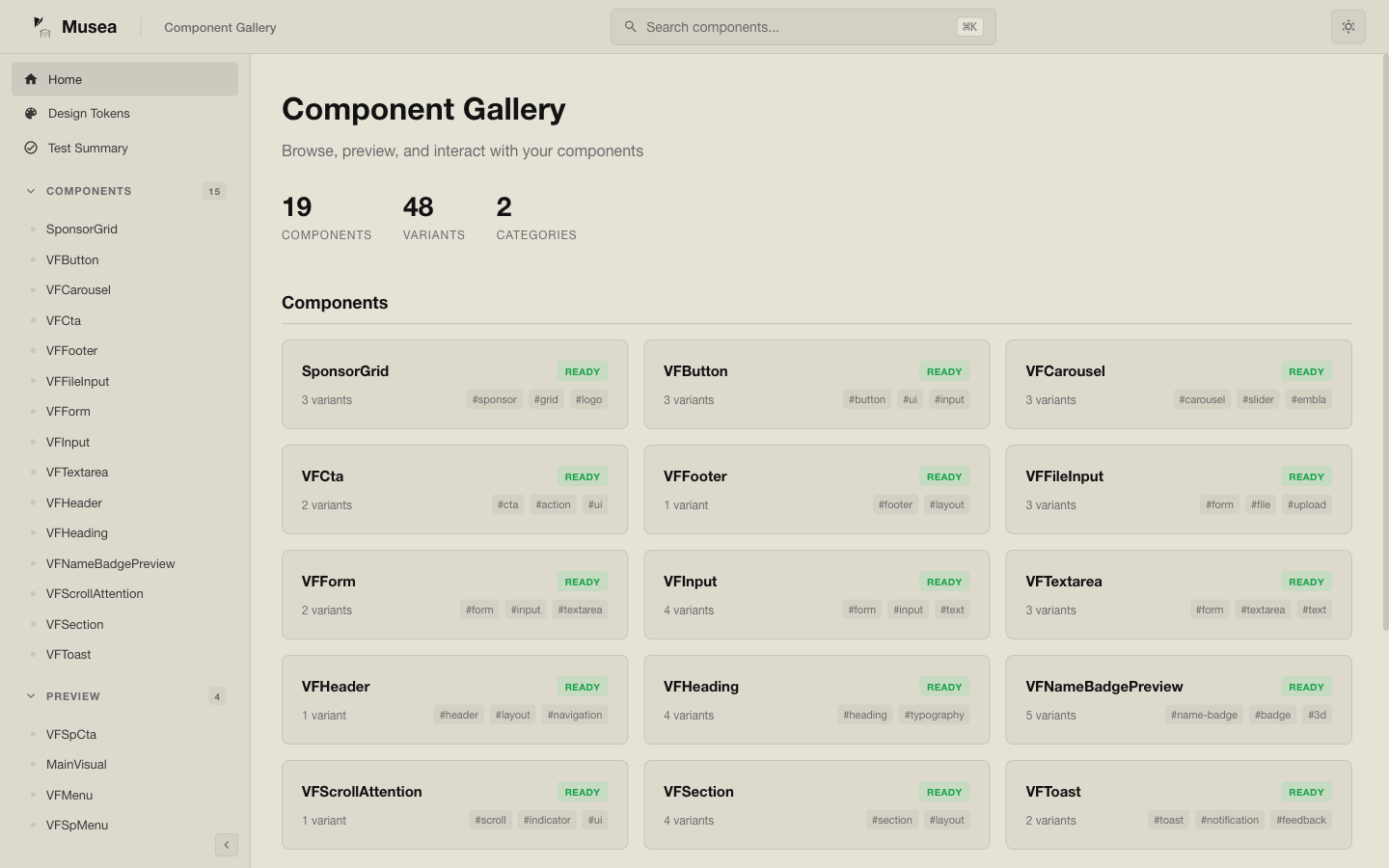
Musea is not just a gallery. It is a way to make the design-system surface part of the toolchain.
What Musea Is Trying to Provide
The practical features matter:
- component gallery pages
- art files that describe examples and states
- generated documentation
- palette and token workflows
- accessibility checks
- visual regression testing
- Vite integration for local exploration
- MCP integration so AI tools can inspect component context
The point is not to make a prettier catalog.
The point is to turn components into reviewable, testable, documented artifacts.
When an agent changes a component, Musea should help answer:
- which states changed?
- which examples are affected?
- did the visual baseline move?
- did accessibility regress?
- does the component still match its documented intent?
- can another agent understand how to use it?
AI Needs Product Memory
Models do not automatically know your product.
They may know general UI patterns, but product quality lives in details:
- which tone the UI uses
- how dense operational screens should be
- which controls are canonical
- how destructive actions are presented
- how empty states behave
- how brand and accessibility tradeoffs are handled
Musea can become product memory for those details.
It gives AI workflows something better than a prompt: a structured surface of real components, real states, real examples, and real constraints.
Visual Review Becomes More Important
AI-generated UI can look plausible while still being wrong.
The layout may be subtly inconsistent. The contrast may fail. The hover state may shift the layout. A long label may wrap badly. A loading state may cover important context.
That is why visual regression testing belongs close to the component gallery.
Static analysis can catch structural mistakes. Type checking can catch contracts. But visual systems need visual evidence.
Musea should make visual review routine:
- generate states
- capture screenshots
- compare baselines
- surface diffs
- keep review close to the component
That turns design quality into a repeatable workflow instead of a last-minute screenshot thread.
Design Systems Are AI Infrastructure
In the pre-AI era, a design system mostly helped humans move faster with consistency.
In the AI era, it also helps machines move safely.
A strong design system gives agents:
- a vocabulary
- examples to imitate
- constraints to respect
- tests to pass
- docs to read
- visual baselines to preserve
That is infrastructure.
Musea exists because Vize should not stop at code correctness. Frontend quality includes visual quality, accessibility, and product coherence.
AI increases the need for all of that.
The future is not "AI generates UI, so design systems matter less."
The future is "AI generates UI, so design systems have to become executable, inspectable, and testable."